Monday, May 15, 2006

Thanks For Everyday Blessings


Dear God,
Open my eyes to the beauty of this day.
The yellow of an egg yolk in a blue bowl.
The scent of bacon frying in the pan.
The soft caress of the morning breeze.
The sound of children at play.
Awaken my senses.
Let me see, hear, and feel the beauty around me.
And be aware of the presence of the Great Artist in my everyday world.

Source: William Webber in "Prayers for Every Need: Volume One: Celebration” (Guideposts)

Image: Egg Yolk in Bowl

Little Things Matter

Rick Bass, a very good writer, lives in Montana and is a fervent environmentalist.

Bass wrote an essay in which he said that when confronted with a complex and difficult task, he used to imagine himself laying down one brick after another, brick by brick by brick, to eventually accomplish his aims. But he's recently changed his metaphor from bricks to glaciers. A glacier is the most powerful force the world has ever seen. Literally nothing can stop a glacier.

A glacier is formed by the falling of snow that collects over a period of time. As the snow deepens, the weight compresses, ice forms, then more snow, then more ice, year after year— and nothing happens. Nothing happens until that glacier is 64 feet thick. Then it starts to move and nothing can stop it.

Bass notes that one theory about the origin of glaciers is that they are "the result of a wobble, a hitch, in the earth's rotation. . . . Glaciers get built or not built, simply, miraculously, because the earth is canting a single one-trillionth of a degree in this direction for a long period of time, rather than in that direction."

And then this comment: "When I am alone in the woods, and the struggle seems insignificant or futile, or when I am in a public meeting and am being kicked all over the place, I tell myself that little things matter—and I believe that they do. I believe that even if your heart leans just a few degrees to the left or the right of center, that with enough resolve, which can substitute for mass, and enough time, a wobble will one day begin, and the ice will begin to form, where for a long time previous there might have been none. Keep it up for a lifetime or two or three, and then one day—it must—the ice will begin to slide."

Source: Ron Bass, The Roadless Yak, Lyons Press.

Image: Franz Joseph Glacier, NZ

Sunday, May 14, 2006

Salvation? Conversion?

On a New Zealand radio broadcast the Rev Eddie Farr related a funny thing that happened to him on the way to a minister’s meeting.

As he was walking down the path toward the meeting place, an unoccupied car beside him started to move. Instinctively he grabbed hold of it to try and stop it rolling. He said it was like trying to catch a tiger by the tail, once you caught hold of it, you couldn’t let it go.

Several other ministers soon arrived on the scene. They looked rather amused until they realised the plight that he was in. The vicar tried opening the car door so that he could turn the steering wheel but the door was locked. Eventually they managed to twist the wheels around and let the car come to rest on the roadside. Then one of them wrote a note and left it on the windscreen. The note read, “Your car has been saved by the efforts of three clergymen”.

Eddie Farr said that when he related this incident to those at the meeting one of his colleagues said: “You thought you were trying to save it did you? Perhaps you were all trying to convert it!”

Conversion. Salvation. These are slippery words and they both have taken quite a battering.

Source: Eddie Farr, A Faith for Today, New Zealand National Program, radio talk, circa 1980.

Image: Another car in need of pushing. A much earlier model than 1980!!

Saturday, May 13, 2006

Tuning Out Tuning In

Most people these days can’t bear to turn off their cell phones. Despite the cell phone free signs and verbal announcements a never-ending variety of ring tones are sounding in shopping centers, schools, libraries, rest rooms, trains, at the movies and even at funeral services.

Brenda Goodman, in a New York Times article, says there’s a new epidemic afflicting humans today. It is called ‘ringanxiety’ or ‘fauxcellarm’.

We might be taking a shower, blow-drying our hair or watching an ad on television and we think our cell phone is ringing. These phantom phone rings are an audio illusion and they’re a symptom of the saturation of the air waves.

With cell phones becoming like an extra limb sprouting from our ears, most people are in a constant state of telephone vigilance.

Our ears become attuned to certain sounds like the crying of a baby and the ringing of a phone.

The vital thing is that we practice the discipline of silencing the familiar sounds and conditioning our ears to listen to the still, small voice of God.

Geoff Pound

Source: Brenda Goodman, ‘I Hear Ringing and There’s No One There. I Wonder Why’, New York Times, 4 May 2006.

Web site address:
http://www.nytimes.com/2006/05/04/fashion/thursdaystyles/04phan.html?ex=1147406400&en=6d2ed8a8b702517e&ei=5070&emc=eta1

Image: Cell Phone Free Zone

Friday, May 12, 2006

Your God Is Too Weak

Some time back there was an amusing sight in the main street of a New Zealand city.

Driving along, on the right side of the street there was a skyscraper in the process of being built. It was a hot day in the middle of summer and the crane was in operation. On the end of its hoist was not a big packet of timber nor a giant steel beam but a pair of basketball boots!

The crane operator had manoeuvred the crane so that it went over the street. He then lowered his little load so that his boots got dunked in the city fish pond. Then after they were cooled, he hoisted them back up and presumably put them on.

Now what an amazing contrast! A huge crane, capable of lifting a gigantic weight, but used instead to hoist a pair of basketball boots.

Now isn't that what we do a lot of the time?
We have this mighty power of the Holy Spirit available to us.
This power is capable of lifting people's burdens and hoisting hang-ups from people's lives.
This power of God can help reconstruct people and build a brand new society but so often all we use the Holy Spirit for is to make us feel good, to cool us down a little bit and to make us feel more comfortable.

Source: Heard in an address by Graham Brogden, circa 1987. Thanks Graham!

Image: Crane

Thursday, May 11, 2006

Covey Coming Near With Understanding

Leadership guru Stephen Covey recounts a time when he learned the value of coming near.

He was travelling on a train one Sunday morning in New York. People were sitting quietly, some reading their papers, some lost in thought, some resting with their eyes closed.

It was calm and peaceful when suddenly a man and his children got on board. The children were loud. They were feral and they instantly shattered the peace.

The man sat down next to Covey and closed his eyes, apparently oblivious to the situation. His children were yelling backwards and forwards, throwing things, even grabbing people's papers. It was very disturbing. And yet the man did nothing!

Stephen felt irritated. He couldn't believe the man could be so insensitive as to let his children run wild and do nothing about it.

So finally, noticing how angry others were Stephen lent across to the man and said:
"Sir, your children are really disturbing a lot of people. I wonder if you couldn't control them a little more?"

The man lifted his gaze and came to and said:
"Oh you're right. I guess I should do something about it. We just came from the hospital where their mother died about an hour ago. I don't know what to think and I guess they don't know how to handle it either."

Can you imagine how Covey felt at that moment? He suddenly saw things differently. He thought differently. He felt differently and he behaved differently.

His irritation vanished and his heart was filled with the man's pain. Feelings of sympathy and compassion flowed.

"Your wife's just died?" he said, "Oh I'm sorry. Can you tell me about it? What can I do to help?"

Drawing near to the man and understanding his state threw a totally different light on the situation.

Source: Stephen R Covey, A Roger Merrill, Rebecca R Merrill, First Things First, Covey Leadership Centre, 1994.

Image: Stephen Covey

Wednesday, May 10, 2006

Up Close and Personal

One thing that did not amuse Queen Victoria was that every time she had her regular sessions with the Prime Minister, W E Gladstone addressed her as if she was a public meeting!

During her interminable reign Gladstone was PM for four terms so this duo had ample time to get to know each other.

It was said of Queen Victoria that she sat over England for almost 64 years like a giant paper weight. Royalty must create a measure of distance and the austere photos of Her Majesty make one wonder how anyone could get up close and personal with her. Did she want the PM to call her Victoria or Vicky?

Perhaps the higher one’s standing in life the greater the challenge it is to cultivate the personal touch.

A monarch can look at people and see subjects.
A shop keeper can look at people and see customers.
A doctor can look at people and see patients.
A lawyer can look at people and see clients.
A teacher can look at people and see students.
A politician can look at people and see voters.
A promoter can look at people and see fans.
A pastor can look at people and see parishioners.

It is easy to consign people to categories and see not the person but only their label‑ black, white, teenager, gay, solo parent, divorcee, priest, disabled, unemployed…

We cultivate the personal touch by relating to people in all their uniqueness.
We cultivate the personal touch by taking a genuine interest in who they are and what they do.
We cultivate the personal touch by looking at people intently when we talk [although in some cultures viz. Pacific Island this is not encouraged].
We cultivate the personal touch by listening to people’s words and hearing their cries.
We will speak to people less as a public meeting when we use and remember their names.

Prisons are perhaps the worst places for experiencing the personal touch and this is part of the punishment. Individuality is squelched through uniforms and uniformity of cells and regulations. Traditionally prison inmates have been called by their numbers rather than their names.

A women’s social group decided to write to jail inmates to encourage them. Because they were given only the prisoners’ identity numbers, they weren’t sure how to address their letters in a friendly way. “Dear 70567219,” sounded too impersonal.

In order to break down the barriers one woman wrote, “Dear 70567219 “or may I call you 705?”

Geoff Pound

Image: Queen Victoria

Source: The prison story comes from Reader’s Digest in their first ever E Newsletter, May 2006.

Tuesday, May 09, 2006

Longing For Love

The personal column in the London Review of Books is zany and engaging.


My friend, who passes this journal on to me each month, thinks that I devour them for their erudite literary reviews but to be honest, the greatest draw card is the Personals.

Here is a sample from the last couple of editions:


Reply to this advert, then together we can face the harsh realities of my second mortgage. M, 38, WLTM woman to 70 with active credit cards.

This ad is not an attempt to find a partner. It is a Guinness attempt at a record number of rejections. Realistically, however, I’ll probably fail, as I’m the most gorgeous man in here, having better hair than everybody else and am fluent in 17 languages (of which half are no longer in use). M, 32. Golden nutritious wheat in a rotting column of chaff.

The uncomfortable mantle of guilt, the heavy cloak of ignominy, the coarse socks of denial, the iridescent trousers of doubt, the belligerent underpants of self-loathing. All worn by the haberdasher of shame (M, 34, Pembs). Seeks woman in possession of the Wundaweb iron-on hem of redemption and some knowledge of workaday delicates. No loons.

Coming from one of the world’s largest coal-producing regions, you’d expect me to litter this ad with clever references to coal and the decline of the coal industry and possibly some nostalgia about my father working in a coal mine and a few anecdotes about accidents, heroism and camaraderie and everyone supporting each other in times of coal-related hardship and crisis. Instead, I’d like to talk about my cats. Gentleman, 55. Likes cats.

I butchered three volumes of Seamus Heaney to produce this ad. Publicity exec (F, 31).

Last Valentine’s Day I sponsored a truck-load of mitten crabs on behalf of my girlfriend. She left me not long afterwards, but the mitten crabs are thriving. I learned an important lesson through all of this but I’m really not sure what it was. That’s where you come in, F to 35 with profound love of mitten crabs for evenings spent drinking home-made iron brew and plotting the migratory pattern of mitten crabs with amateur mitten crab enthusiast (M, 35).

Not all these ads are expressions of lighthearted wit. Here’s one that truthfully expresses the pain and sadness that often lurk behind these words:

This column is a ziggurat of heartache and I am its high priest.

In the country where I live (UAE) the Seeking a Partner columns go for pages. I am told by a marketing expert in Dubai that the matrimonial web sites in the UAE have the highest number of hits.

Problematic relationships can lead to intense misery and pain. However, vibrant, creative and spacious relationships can be a source of deep satisfaction and joy.

Nowhere has this been more beautifully expressed than in George Eliot’s Friendship Poem. I wonder if you know it.


“Oh, the comfort,
the inexpressible comfort of feeling safe with a person,
having neither to weigh thoughts nor measure words,
but pouring them all
out, just as they are, chaff and grain together,
certain that a faithful
hand will take and sift them,
keep what is worth keeping,
and with a
breath of kindness blow the rest away.”

Geoff Pound

Sources: London Review of Books (Jan-April 2006)

Image: Friendship?

Monday, May 08, 2006

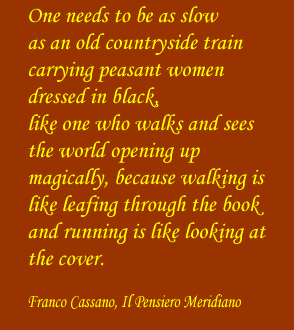
Converting To Slow Travel

My wife and I have just been converted!

It was neither as dramatic as the Damascus Road experience, nor like the dawning variety on the Emmaus Road.

Ours took place at a virtual location but let me first give our testimony (read tes-ti-moany for Americans).

Lyn and I have been dreaming of our forthcoming holiday in Italy. Given the job of preparing the itinerary and ferreting out champagne accommodation at Coca-Cola prices, I got to work.

Guide books were helpful with their draft tours and suggestions of how many days needed here and there. My first effort started in the mountains north of Milan and ended thirty-five days later at the toe of Italy’s boot.

I started to feel harried and exhausted plotting each day’s sorti into cathedrals and galleries, figuring out whether it was best to travel between Florence and Siena by train or bus and imagining dossing down in a different hotel or monasterio every night.

Then, like the person who kicked up a treasure in the field, I stumbled onto a web site called Slow Travel.

The author, Yvonne Kenny, is the instigator of the web site which nourishes a virtual community of people who love to travel slowly.

In a posting entitled ‘What is Slow Travel?’ Yvonne writes, “Slow Travel is independent travel where you enjoy a deeper level of experience by staying in one place longer and seeing the things that are close to you.”

Humorously, Yvonne draws a parallel with reading and quotes Woody Allen who said, “I took a speed reading course and read ‘War and Peace’ in twenty minutes. It involved Russia.”

Slow Travel involves moving out from where you are rather than flitting around in long, expensive trips to get a superficial snapshot of ‘the highlights’.

One liberating article is called, ‘You Don’t Have to See the Must-Sees’ in which Yvonne cites the ‘National Lampoon’s European Vacation’. In this movie Chevy Chase rushes around Paris with his check list, looks at a site for a minute, then happily checks it off his list.

Yvonne challenges the ‘English Village Syndrome’ in which a tourist returns from their first visit to a village and says to everyone, “You must see______________” [fill in the gap]. The assumption is that no other town will have quite the same character or impact.

We are being liberated from the compulsion to go everywhere and see everything. This conversion will need to kick in after our return when someone says to us, “You mean to say you went all that way and didn’t see ___________________?”

We have completed our second, slow travel, Italian itinerary and it has got that molto bene feel about it! In a very real sense, our most important journey has slowly begun. We are learning to travel more as pilgrims and less as tourists.

Geoff Pound

Source: Check out the Slow Travel web site at: http://www.slowtrav.com/

Image: Slow as an old countryside train...

Sunday, May 07, 2006

Hanging Out Our Dirty Laundry

Laura Barnett and Sandra Spannan have recently set up shop on 44th Street in Manhattan. They are not selling anything but their temporary exhibition entitled ‘Inside/Out’, is a laundry mat with a difference.

Laura and Sandra are performance artists and they stand and sit in the shop window dressed in white, like nineteenth century washerwomen.

While Sandra does some portrait drawing of passers-by Laura will put her fingers to her lips and underline the words on the glass which extend the invitation: “Air your dirty laundry. 100% confidential. Anonymous. Free.”

Those on the other side of the glass are urged to pick up a pen and clipboard, write down their confession, seal their paper in an envelope marked ‘secret’ and drop it in a bucket on the pavement.

When the author is out of sight an assistant delivers the envelopes to Laura who reads the confessions and tapes them on the window for the world to see.

Passers-by stop in their scores to study the newly revealed secrets. This could be seen as a horrible case of venial voyeurism but it might also provide a necessary catalyst and grant permission to many to make their own honest confession.

Getting into the confessional spirit, author of this fascinating article, Kathryn Shattuck, admits, “It’s hard to resist the temptation to compare sins.”

One confession reads: “I am dating a married man and getting financial compensation in exchange for the guilt.”

Another statement says: “I make fun of my friend behind her back all the time.”

One person said: “The hermit crab was still alive when I threw it down the trash shoot.”

And then the cry from the heart: “I haven’t yet visited my dead parent’s grave.”

Like all dirty washing there are smalls and large, old and new, sexual and surprising. Some expressed anxiety that they were carrying in regard to real estate. One person confessed he had murdered someone years earlier.

Is this another incident of, “This could only happen in New York!?” Well, ‘No’! Laura and Sandra have offered this laundry service before with dry runs, not only in New York but in Berlin.

“The Germans were so dark,” said Ms Barnett. “It was like they had been waiting for us to come.”

My guess is that there are scores of people on our streets waiting for such an opportunity.

I went to a church last night that I hadn’t visited before. At one stage in the service the worship leader said, “Let us confess our sins.” In the next few seconds, amid the hundreds of people who were present, there was a cacophony of confession. Then came the liberating announcement of absolution, “You are accepted! You are forgiven! You are free!”

Such an opportunity within the church to confess our sins is so rare I get surprised when it happens. Karl Menninger hit the nail on the head with the title of his book that asks, ‘Whatever Became of Sin?’

Laura and Sandra’s temporary, makeshift confessional has done enough to highlight the truth that there are lots of stories waiting to be told. There are people on our streets longing for the healing that comes when we make our confession in honesty and in trust.

So, what’s in our washing basket and how might we provide the opportunities for us all to hang out our dirty linen?

Geoff Pound

Source: Kathryn Shattuck, ‘Artists Display Confession of Passers-by on a 44th Street Storefront’, New York Times, 6 May 2006.

Web site address:
http://www.nytimes.com/2006/05/06/arts/design/06secr.html?ex=1147579200&en=743a4a024496eedc&ei=5070&emc=eta1

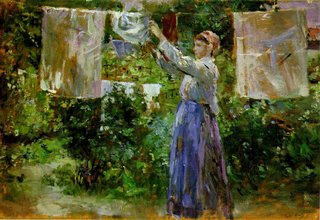
Image: The painting, ‘Peasant Hanging out the Washing’, by Berthe Morisot, 1881.

‘Daylight come and me wanna go home!’

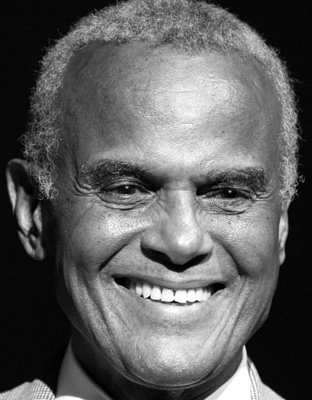
Harry Belafonte recently received an award from the TransAfrica Forum. As he entered the hall at Howard University in Washington DC, wafting through the public address system was his signature tune: “Day-o, day-ay ay-o…Daylight come and me wanna go home.”

As the large crowd of civil rights activists, celebrities and ambassadors gave Belafonte a standing ovation the big screen flashed snapshots of his career including photos of Belafonte with Martin Luther King Jnr and Bobby Kennedy.

At 79, the old entertainer in his response was stingingly prophetic. In January this year he led a delegation to Venezuela to talk with President Chavez and he reported on this visit. On George Bush, he boldly labelled him as “the greatest terrorist in the world.”

Some think Belafonte in his old age is going too far but throughout his entire career he has pushed the boundaries and been uncomfortable. In taking up the cause of Martin Luther King Jnr he told the audience, “I was a threat for my middle class and white audience.”

But to prove the usefulness of such unpopular protest Belafonte said, “Now look how far the mainstream edge has moved. Dr King is [now] a holiday.”

It was vindication to see Belafonte receiving a lifetime service award because his prophetic work has come at a cost.

When asked what has sustained him Belafonte looked back and recalled some advice he got from his role model, the blacklisted singer, Paul Robeson.

Robeson told him, “Get them to sing your song and they’ll want to know who you are.”

“Sure enough,” Belafonte said, I woke up one day and the whole world was singing ‘Day-o’ ‘Daylight come and me wanna go home!’

Geoff Pound

Source: David Montgomery, ‘Controversial Entertainer’, LA Times; Washington Post; Gulf News, 13 April 2006.

Web Address:< http://archive.gulfnews.com/articles/06/04/13/10032766.html>

Image: Harry Belafonte

Saturday, May 06, 2006

But...But...But...

An English minister who went on a preaching tour to the USA had not done enough cross cultural orientation.

On his first Sunday he was preaching in California on the biblical text from 2 Kings ch 5 v1:
"Now Naaman was a commander of the king, a mighty man of valour but he had leprosy."

He was wanting to make what is a very good point, that no matter how important or powerful we may be, there is always a but. There is usually some area where we are vulnerable, where we are reminded of our humanity. This is an area in our life where we are in special need of God's touch.

This Englishman did not know that in America when people talk about a ‘but’, they are usually thinking about their ‘butt’, their backside.

The preacher said: “My sermon is about the three buts.”

“My first point is: Everybody has a but.”

“My second point: Have you seen your own but?”

“My final point is: Have you seen your neighbour's but?”

Geoff Pound

Source: I heard this story from Lloyd Crawford who had an amazing fund of stories and was a wonderful story teller. I had the privilege of working with Lloyd in the 1980s.

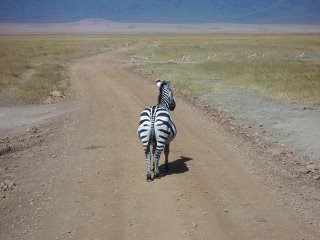
Image: A striped butt.

Remembering That We Are Dust

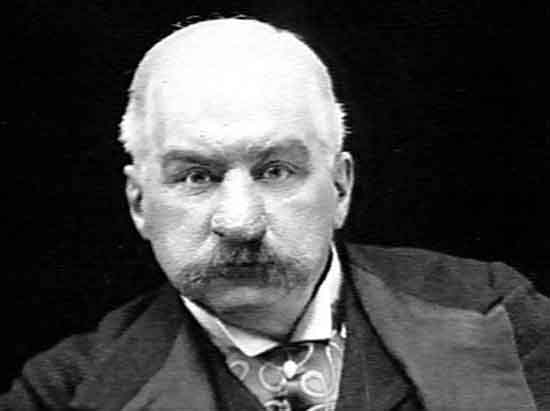
In the early years of the twentieth century J P Morgan sat at the top of the business pyramid. The Bill Gates of his era, the great financier had his offices on Wall Street.

E L Doctorow gives this colourful description of his influence:
“Pierpont Morgan was that classic American hero, a man born to extreme wealth who by dint of hard work and ruthlessness multiplies the family fortune till it is out of sight. He controlled 741 directorships in 112 corporations…. Moving about in private railroad cars or yachts he crossed all borders and was at home anywhere in the world. He was a monarch of the invisible, transnational kingdom of capital whose sovereignty was everywhere granted. Commanding resources that beggared royal fortunes, he was a revolutionist who left to presidents and kings their territory while he took control of their railroads and shipping lines, banks and trust companies, industrial plants and public utilities.”

J P Morgan it seems had everything BUT, he had one major challenge.

Listen to Doctorow again with an even more colourful description:
“Only one thing served to remind Pierpont Morgan of his humanity and that was a chronic skin disease that had colonized his nose and made of it a strawberry of the award-winning giant type grown by California’s wizard of horticulture, Luther Burbank. This affliction had come to Morgan in his young manhood. As he grew older and richer the nose grew larger. He learned to stare down people who looked at it, but every day of his life, when he arose, he examined it in the mirror, finding it indeed loathsome but at the same time exquisitely satisfying. It seemed to him that every time he made an acquisition or manipulated a bond issue or took over an industry, another bright red pericarp burst into bloom.”

“His favorite story in literature was a tale of Nathaniel Hawthorne’s entitled, ‘The Birthmark,’ which told of an extraordinarily lovely woman whose beauty was perfect except for a small birthmark on her cheek. When her husband, a natural scientist, made her drink a potion designed to rid her of this imperfection, the birthmark disappeared; but as its last faintest outline vanished from her skin and she was perfect, she died.”

“To Morgan, the disfigurement of his monstrous nose was the touch of God upon him, the assurance of mortality. It was the steadiest assurance he had.”

Geoff Pound

Sources:
E L Doctorow, Ragtime, 137-141.
Wikipedia at http://en.wikipedia.org/wiki/J._P._Morgan
For more information on Morgan’s skin complaint known as rosacea, see http://en.wikipedia.org/wiki/Rosacea

Image: J P Morgan [JP hated having his photo taken, for obvious reasons!]

Born Again?

I met a woman this week who told me she attended church.

“What sort of church?” I quizzed.

“It’s a born again church,” she boasted proudly.

It happened to be a church that meets in her home and it represents one third of an older church that split into three pieces. She had forgotten the reason why they had divided. All three churches still worshipped in the same language and they all believed the same doctrine: “Father, Son and Holy Ghost.” Somehow the three groups did not get on with each other any more and it seemed that the Trinity mantra was all words and impotent to hold this trio together.

This conversation reminded me of a story Billy Graham once told of one of his many plane trips. An airline steward was having a lot of trouble with a very rowdy passenger in the seat behind him. The man was drunk. He was getting more and more rude, so finally the steward whispered to the man, “Watch what you are saying! That is Billy Graham sitting right in front of you.”

Hearing that information, the drunk man leaned forward and he said, “Billy Graham. Billy Graham. I have always wanted to thank you for what you have done for my life.”

The intoxicated passenger may have had his hour of decision for Christ but it appeared that he wasn’t living under His influence.

Geoff Pound.

Image: Illustration by Jennifer Kalis

Friday, May 05, 2006

Where Do You Place the Comma?

I’m sure you’ve sensed the growing dissatisfaction with the old models of heroic leadership or presidential and charismatic leadership that laud the leader as super-human, successful and who is often solo leader and several steps removed from the others.

One such leader was given the honourable epitaph: “He did everything for God’s sake.”

The stonemason made a mistake or perhaps saw it differently.

He inserted a comma so the sentence read: “He did everything, for God’s sake.”

When it comes to punctuating your epitaph, where would you place the comma?

Geoff Pound

Image: Comma

Thursday, May 04, 2006

Anointed With Delight

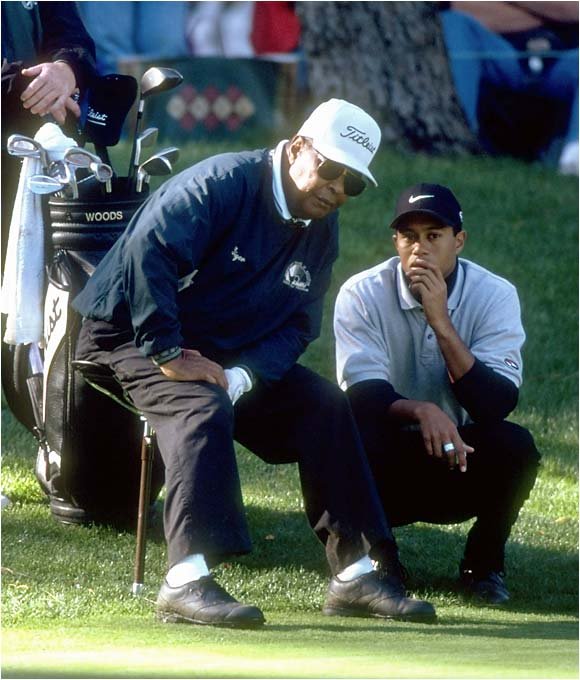
Tiger Woods is today mourning the lost of his father Earl. The champion golfer has said repeatedly that his father has been the biggest influence on his life and career. Earl Woods is the one most responsible for the tiger burning bright.

The tributes flowing in reveal the way the doting father groomed his son to be a great golfer from such an early age. Earl has been criticised many times for the pressure he put on his son but the father said, “I’ve always been more determined to raise a good son than to raise a good golfer.”

The video footage of the golfer with his Dad provides compelling evidence of the great love between the two men. It is a wonderful commendation of the vital influence a parent can have.

The bestowal of pleasure by a parent on a child is such an amazing gift.

Isn't this the number one item on the agenda when the little creature is thrust out of the womb? Where am I? Will my needs be met as adequately as they were in my mother's womb? How am I regarded in this place? Is it well that I be here? Is my presence valued and welcomed or deplored and resented?

These are the issues that probably dominate the dawning consciousness of a new born child and they continue through words that are spoken, the way a child is touched and the emotional tone of the whole atmosphere that surrounds this new beginning.

And this basic attitude, whether the parents value the child or not, more than anything else shapes or misshapes the child's self-understanding.

Happy is the child who encounters such affection early in life.

Sam Keene was one such child. As he was visiting with his father just before the older man died, he had occasion to look back over their life together and thank his father for the excellent job he had done.

"You have always been there whenever any of us children needed you. And across the years, you have given us the best single gift that any parent could give- you took delight in us.”

“In all sorts of ways you let us know that you were glad we were here, that we had value in your eyes, that our presence was a joy and not a burden to you."

When I read that tribute I expressed grateful thanks for my own wonderful Dad. My mind then went to the baptism of Jesus and those timeless words: "This is my beloved son in whom I am well pleased." The sustaining words of a father bestowing pleasure on his son.

As we pray for Tiger in his great loss, we rejoice with him in the memory of a father who, with his mother, nurtured his superb character and we give thanks for the significant people in our lives who have anointed us with delight.

Geoff Pound

Source: The Sam Keen story comes from John Claypool’s marvellous book, Stages.

Image: Earl and Tiger Woods.

Wednesday, May 03, 2006

Singing in Tongues: George Bush and the National Anthem

What an opportunity President George Bush has missed in insisting that all Americans should sing their national anthem only in English. The Hispanics are not asking for their own anthem but the newly released Spanish version of the American anthem, ‘Nuestro Himno’, seems too closely aligned to the mounting immigrants’ rights movement.

My spine tingles when I hear the South African and New Zealand anthems sung in the indigenous languages of those countries. It adds a depth, a richness and it is an audible tribute to the history of those nations.

To give the President credit, George Bush grew up in Texas with students of Mexican descent and he does give speeches in the Spanish language. But in this response he is promoting a monochrome society that blurs differences in a cultural melting pot.

Have a listen [see web reference below] to the Star Spangled Banner in Spanish. There are a few freedoms taken with the words but you can imagine how good it would be to hear Americans of different cultures singing it with Spanish passion and stridency to the accompaniment of guitars and castanets.

It is easy for us to settle with the ‘teabags policy’. This is the promotion of the idea that everyone can and should drink the same tea, preferably from the ubiquitous Lipton’s tea bag. This fails to appreciate the aromas, the tastes and the colours that come from tea grown in different parts of the world.

George should take a leaf out of the journal of another world leader, Charles V, King of Spain (1500-1558) who wrote:

“I speak Spanish to God, Italian to women, French to men and German to my horse.” Even back in the sixteenth century it seems there was an enlightened approach to the different contributions that language and culture can make to a community and a nation.

Like an effective sports coach it is essential to get to know both the strengths and the weaknesses of each culture and to position them accordingly. This idea is hinted at in a poster found in Switzerland that declares:

HEAVEN is
a French chef,
a German engineer,
an Italian lover
and everything organized by the Swiss.

HELL is
an English chef,
a German police officer,
a French engineer,
a Swiss lover
and everything organized by an Italian.

Cultural appreciation is also vital in matters of faith. Highlighting the various forms of Christian expression someone said:

The English love the Gospel because it gives them something to talk about.
The Welsh love the Gospel because it gives them something to sing about.
The Irish love the Gospel because it gives them something to fight about.
The Scots love the Gospel because it gives them something for nothing!

Affirming our language and appreciating our unique cultural gifts is one of the first steps in building a community.

Geoff Pound

Source: This posting was triggered by the article in the New York Times, ‘Bush Enters Anthem Fight on Language’, by Jim Rutenberg, 29 April, 2006.

Address of Audio Version of the American National Anthem:
http://graphics8.nytimes.com/packages/audio/national/himno.mp3

Image: El Presidente

Hooray for Grandmothers!

With Mother’s day coming up in various countries around the world it is timely to recognize the massive contribution of grandmothers. I love the essay that an eight year old wrote entitled, What a Grandmother Is.

This is what he wrote:

“A grandmother is a lady who has no children of her own, so she likes other
people’s little girls and boys. A grandfather is a man grandmother. He goes for
walks with the boys and they talk about fishing and tractors. "

"Grandmothers don’t have to do anything but be there. They are old, so they
shouldn’t play hard or run. They should never say 'hurry up.'"

"Usually they are fat but are not too fat to tie children’s shoes. They wear
glasses and funny underwear and they can take their teeth and gums off. "

"They don’t have to be smart, only answer questions like why dogs hate cats and
why God isn’t married."

"They don’t talk baby-talk like visitors. When they read to us, they don’t skip
bits or mind if it is the same story over again."

"Everybody should have one, especially if you don’t have television, because
grandmothers are the only grownups who have time.”

The touch is light but did you feel the punch line? Oooooch! “Grandmothers are the only grownups who have time.”

One of the greatest gifts we have is the gift of time. One of the greatest gifts we can give to children and old people is the gift of our time—not only being there but being fully present to listen and to care.

Geoff Pound

Source: From a book of sermons and speeches (given to me by Graham Brogden…thanks Graham!) by the former Archbishop of Canterbury, Donald Coggan.

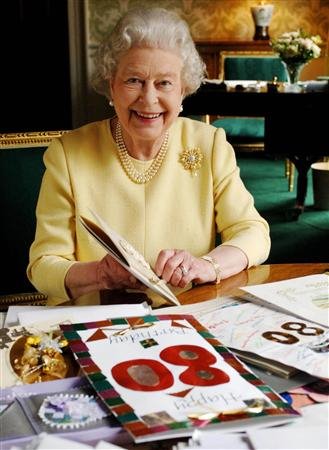
Image: One grandmother, still working at eighty.

Tuesday, May 02, 2006

The Adventurer Spirit

I love people who exude a sense of adventure. The people who pioneer and blaze new trails. One such person was the prominent twentieth century dancer, Isadora Duncan.

She was born in 1878 in San Francisco and grew up in a childhood filled with imagination and art. In her teenage years, she travelled to Chicago and New York and performed in various productions such as Mme. Pygmalion, Midsummer's Night Dream and vaudeville shows with limited success.

It was not until she reached London, however, that Isadora began to find acceptance for her dancing. Her popularity grew, and she began performing on great stages throughout Europe.

During her life, Isadora was passionate about the education of children, and making sure that their formation included training in art, culture, movement and spirituality. Isadora died tragically in 1927 in a car accident along the Riveria.

Dorothy Parker wrote beautifully of Isadora Duncan when she said:


"There was never a place for her in the terrible slow army of the cautious. She
ran ahead, where there were no paths."


What a powerful tribute and challenge! To leave the ‘terrible slow army of the cautious’ and run ahead where there are no paths.

Geoff Pound

Source: Inspired by an article on another adventurer, Jacqueline de Pres in the Melbourne Age, 24/10/98

Image: Isadora Duncan

The Knack of Networking

An article in Melbourne’s Age, Good Weekender magazine, focussed on Ron Walker's ability to nab for Melbourne big events such as the Grand Prix, the Commonwealth Games and rugby's Bledisloe Cup. What's his secret? The author put it down to Walker's extraordinary networking ability. "This guy is fantastic at networking," said Federal Treasurer, Peter Costello. "I saw him in action for the Commonwealth Games. Ron was just bringing an endless stream of Pacific Island leaders through my office.... If you had Ron working for you on networking—yes, he would be a very valuable ally."

When the writer interviewer asked the man himself, Walker quickly acknowledged a long list of people who had helped him with different tasks. He said, "Hillary didn't climb Everest on his own. He had 1,000 sherpas to help him."

Significant work and ministry has always depended on the ability to interact effectively with others, to sharpen ideas, stimulate creativity, foster encouragement and motivate people to follow the vision.

Meeting people in committees is not in vogue these days with so many agreeing with Fred Allen who said, "A committee is a group of people who individually can do nothing but as a group decide that nothing can be done." Unfortunately committee meetings have tended to suggest a lack of purpose, a certain formality, with the emphasis on what happens in the meeting.

In recent years there has been greater appreciation of networking. This change goes further than semantics. Networking fits better with a generation that prefer to hang loose. Networking has the connotation of connecting in a free, less formal way, without the commitment inherent in committees. Networking implies initiative being taken by anyone and everyone while still having one or some who might serve as convenor or catalyst.

Networking is best enhanced through face to face meetings that flow on to 'conversations' in a variety of ways. Modern technology has multiplied our ability to share information and network across the country and around the world.

If we've got an Everest of two in our lives, let's not try and scale them on our own. Instead, let's be creative in experimenting with all the ways we can tackle things together.

In the farewell words of a woman I overheard in a bookshop recently, "See you on the net!"

Geoff Pound

Image: Ron Walker, networker supreme.

Chorus Singing Chihuahua Style

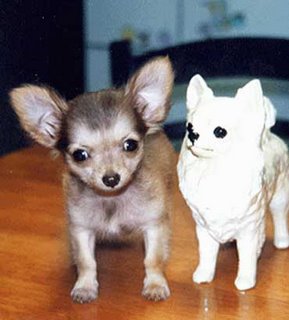
Toward the end of my year itinerating around the state of Victoria as President of the Baptist Churches, I visited a small church which holds their evening services in a home. That night it was held in the home of a disabled woman who got along very fast in her motorised wheelchair. She greeted us at the door along with her two playful Chihuahuas.
The pastor commenced the service with thirty minutes of singing to the accompaniment of his guitar. While we were singing the golden oldie ‘It only takes a spark to get a fire going’ the male and female dogs began to get frisky in the middle of the circle.

A verse later one Chihuahua was mounting the other and jigging around almost in time to the music! It was absolutely hilarious, these two Mexican dogs doing the tango while we were singing, "What a wondrous time is spring..."

The owner saw what was happening and could not intervene because the battery on her wheelchair was being recharged. However, when she realized that her dogs' activities were not conducive to worship, she unplugged her wheelchair and came hurtling toward the dogs, attempting to break them up. As she chased them around the room these dogs, which seemed glued to each other, simply moved to a different piece of the carpet. By this time all the worshippers were killing themselves with laughter.

In desperation, the woman put the wheelchair into reverse, then slammed it into forward gear and retreated into the kitchen. She soon emerged with a bag of sweets which she shook and rattled -obviously the tried and trusty trump card. This ploy parted the dogs, proving perhaps that food is more attractive than sex.

When we reached the climax it was too difficult to sing the words, “I wish for you my friend the happiness that I’ve found.” It was a challenge preaching after such a spectacular floorshow!

Geoff Pound

Image: A couple of Chihuahuas or is that one on the right a toy?

Monday, May 01, 2006

If We Could Talk to the Animals...

We are coming to the end of our menagerie of animal and pet stories.

We have been highlighting the value of the animal story in the communication arsenal. This was sparked by a report on the number of people who keep pets, the amount of money they lavish on them, the open affection they shower on their pets….all this suggests that pets and animals are near to people’s hearts. Animals are an active avenue for gaining people’s attention.

Pet stories touch us deeply, whether they’re about birth and death, lost and found, search and rescue or love and loyalty. Often animals simply help us to wonder.

We can overdo the animal story thing (as we have in this blog site this week!)

Remember, there are cultural dimensions to watch. Where I am currently living, stories about cuddly piglets would go down as well as pork chops on the barbecue. Similarly, in this part of the world dogs are unclean (haram) and are not kept as pets, except by ex-pats (excuse the pun). Furthermore, if you go to be a guest speaker in New Zealand you’ll lose your rapport with your audience if you tell another sheep story!

Please squeal out [i.e. post a comment] if you’ve been trying out some animal stories recently and with what noticeable effect.

Because I find these stories hard to resist I’m going to post one last animal story in my next offering.

Geoff Pound

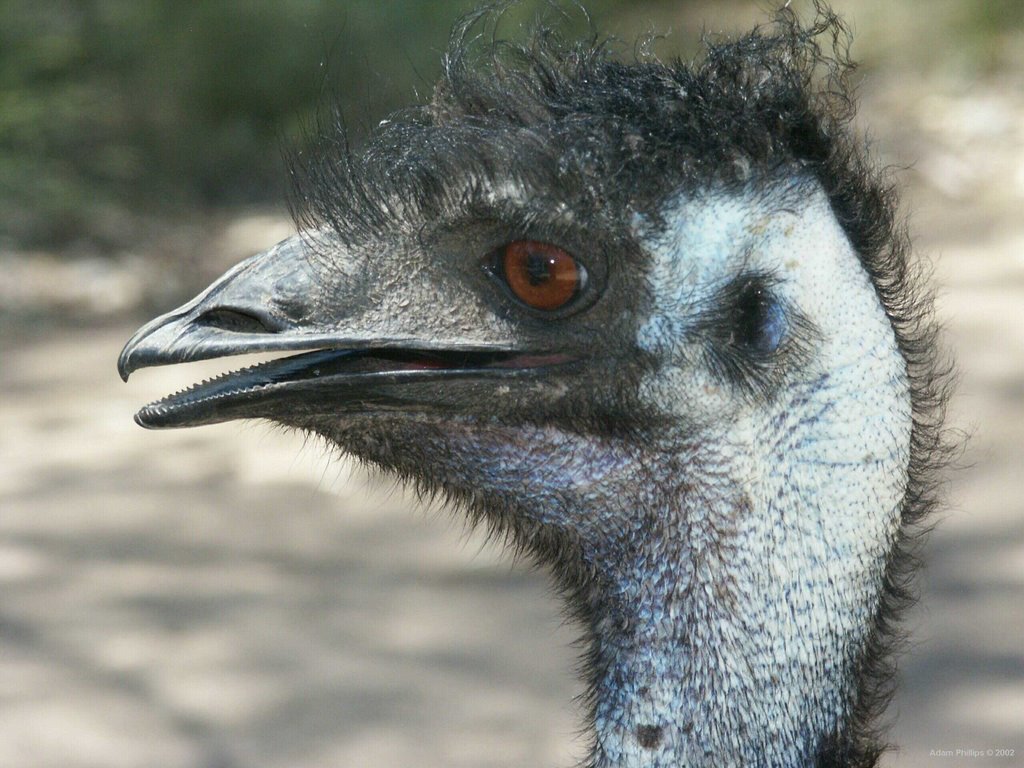
Image: Ever alert emu.

Ears To Hear

I wonder if you saw any of the reports on the way that animals fared in the Asian Tsunami?

At Sri Lanka’s wildlife Park in Yala which keeps elephants, buffalo and monkeys, no animal corpses were found yet the human devastation there was as tragic as elsewhere.

Only 30 of the 250 tourist vehicles that entered the park that Sunday returned to base. It seems the animals sensed the wave coming and headed for higher ground.

In Thailand it was the same before the wave struck. Hermit crabs were seen scrambling up the beaches. Elephants near the sea went crazy as they bellowed, broke their tethers and headed upland.

Zoologists have been writing about the animals’ heightened capacities to hear a quake and sense sound waves and vibrations.

People have been asking: "What about humans—where were our red flags?" They’ve been saying: “We humans can feel infrasound."

But sadly, we don’t always pay attention to the information we get.

Geoff Pound

Source: Various news services after the December 2004 Tsunami

Image: Elephant Ears

Crap Coffee

Don’t you like the rags to riches stories? If there’s any story style I like better it is ‘the ‘rejection to royalty’ category. The Easter story is the supreme example where ‘the stone that was rejected has become the cornerstone’!

More contemporary examples include the story about the publishers who rejected the manuscript, ‘The Spy that Came in From the Cold’ with the accompanying note saying: “John Le CarrĂ© has no future.” Or the one where the little known author, Ian Fleming, is told, “James Bond will never sell.” Or the time when George Orwell’s ‘Animal Farm’ was rejected, with the terse explanation: “Animal stories don’t sell in the USA.”

My latest ‘rejection to royalty’ story comes from the Philippines (so I keep it in a Manila folder).

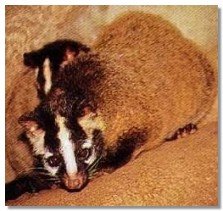
The Philippines has recently discovered it produces one of the world’s most expensive and coveted kinds of coffee. But it comes from a very unusual source. It comes from the cat-like animal called the palm civet. Being nocturnal we would expect the coffee to be a dark roast.

Civets are related to the mongoose. They are usually regarded as pests so they are hunted for their meat or just shot to get rid of them.

The coffee comes from the droppings of the civets! So, not only from a rejected animal but from its rejects comes the best coffee in the world….They probably call this label ‘Civet Gold’ or a ‘Civetchino’.

If you’re keen to get to the bottom of this story, here is what I’ve discovered.

The civets have a taste for the sweet, red coffee cherries that contain the coffee beans. The beans then pass through the civet whole, fermenting in their stomachs and this is what gives the coffee its unique taste and aroma. This is not instant coffee. The civet process is a slow roast!

Professional coffee lovers are starting to track down the trail of civet droppings in the mountains south of Manila. As for the locals, this has been their best, kept secret. In the Philippines, only 500kg are produced each year and the roasted beans sell for more than $115 a kilogram.

Isn’t this amazing? The world’s best coffee is being brewed from the backside of a furry mammal! Now, instead of the animal being hunted and despised there are probably signs all over Manila saying ‘Please replace your civets’.

This may not be everybody’s cup of tea but give this story time to percolate. Sometimes the things and the people who are rejected, in time, turn out to receive the royal treatment.

Geoff Pound

Source: BBC News, 11 April 2006.

Web Site reference: http://news.bbc.co.uk/go/pr/fr/-/2/hi/asia-pacific/4896230.stm

Image: Civet Coffee Maker

My Pig Won't Start

What do you think are the needs people have in your small corner? It is not a bad thing to ponder ways we might discover this.

A recent report of the RACV [the Royal Automobile Club of Victoria, Australia] contained a survey seeking to discover why people came to them for help?

In one year 1.2 million Victorians called the RACV. What do you think was the biggest request? You’re right! The most common need was a flat battery …41 % of all cries for help were because of battery failure caused mainly through leaving our car lights on.

The next most common cause? 21 % of calls were because of keys locked in the car. What an absent minded bunch we are!

The article said that one RACV man arrived at a house to be told, “It’s in the backyard.” When he checked he found no car or any vehicle and when he asked about the person’s need, the householder said: “There's a pig in my backyard, can you help me put it into this bag?” After stuffing the pig into the bag, the mystified man finally discovered that the householder had intended to call the RSPCA!! [Royal Society for the Prevention of Cruelty to Animals]

The article in the Melbourne AGE was headed: “It’s my pig. It just won’t start.”

I think it would do us good to find out the needs and the issues people are facing around us. After that it would be good to reflect on how we can develop our care in such practical responses.

We too might find ourselves being asked to stuff pigs into peoples’ bags but our very willingness to oblige may speak volumes!!

Geoff Pound

Source: The Melbourne Age, circa 2002.

Image: A wayward pig