 Thanks for taking the time to read the postings on this blog.
I am having a break from blogging over the northern hemisphere summer.
Geoff
Thanks for taking the time to read the postings on this blog.

 Joan Brown Campbell tells this story:
 For many years an Arapahoe Indian woman wrote a weekly article for the local newspaper in America. Her English name was Molly Shepherd. Every week she wrote in broken English about her tribal customs, their songs, their funerals, the prizes for the one who came the farthest way to the funeral and the way they would give away everything that the deceased person owned. It was interesting. It was educational. Despite her broken English she had a gift for words.
 A conference speaker decided he needed a memorable framework for his speech.
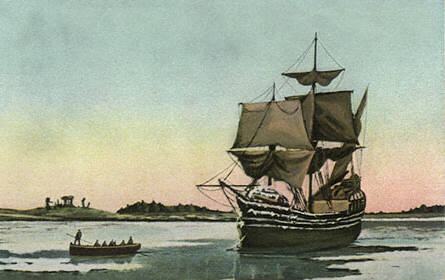 Nathaniel Philbrick’s new book, Mayflower, is a fresh retelling of the voyage of the Pilgrims from Plymouth to New England and their initial contacts with the original American inhabitants of the Wampanoag tribe.
 A reporter in an English newspaper wrote of an episode he recalled. Back in the 1960s a handful of bowler-hatted Englishmen were strolling through London’s Hyde Park and they were stopped short by the sight of a Frisbee flying between an American father and his son. In the 1960s few Britons had seen this American toy.
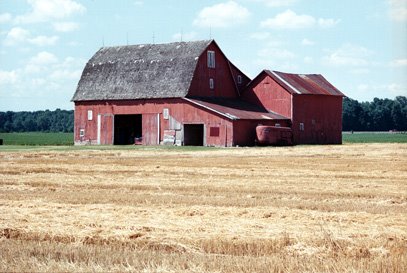 There is an old rabbinic parable about a farmer that had two sons. As soon as they were old enough to walk, he took them to the fields and he taught them everything that he knew about growing crops and raising animals. When he got too old to work, the two boys took over the chores of the farm and when the father died, they had found their working together so meaningful that they decided to keep their partnership. So each brother contributed what he could and during every harvest season, they would divide equally what they had corporately produced. Across the years the elder brother never married, stayed an old bachelor. The younger brother did marry and had eight wonderful children. Some years later when they were having a wonderful harvest, the old bachelor brother thought to himself one night, "My brother has ten mouths to feed. I only have one. He really needs more of his harvest than I do, but I know he is much too fair to renegotiate. I know what I'll do. In the dead of the night when he is already asleep, I'll take some of what I have put in my barn and I'll slip it over into his barn to help him feed his children.
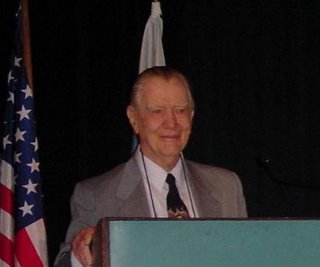 Dr Paul Brand became known for his skill in reconstructive surgery as he spent a lifetime repairing the gnarled hands and thickened faces of people plagued with leprosy.
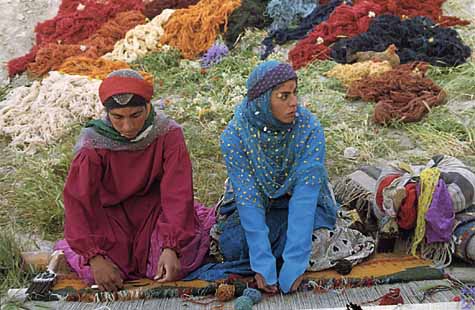 In the opening scene of the Iranian film, Gabbeh, viewers are confronted with a riot of colour‑colourful costumes, bright scenery and a dazzling gabbeh (hand made rug), woven by Iranian nomads. Some viewers have wondered whether this is a colour overkill but there is an interesting story behind this.
 When John Claypool died in September 2005 there were scores of tributes written and spoken about the impact he had had on countless numbers of people. One of the recurring memories of what John had said in his sermons and his books was that life is gift.
 The author G K Chesterton broadened the notion and practice of saying grace when he said:
 Preacher, Dr Jana Childers, in a sermon about ‘Saying Grace’, shares this experience about the way faith and other values are caught more than taught:
 Several years ago an interesting story came out of America that concerned a New York bus driver. He was one of the many bus drivers whose job it was to negotiate the busy streets and crazy drivers in that pulsating city.
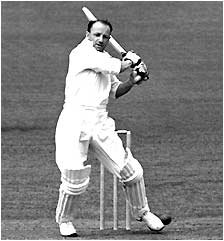 A group that imitates the Beatles in their appearance travels around the world playing the Beatles music and hooking into the nostalgia that many still have towards this popular music group of the sixties and seventies. From the advertising clips they seem to have the perfect mannerisms and facial expressions.
 The author Frederick Buechner shared the following story to suggest what dying might be like.
 Frederick Buechner, in a radio address shared this powerful experience:
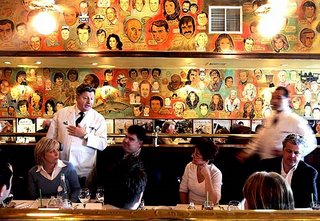 The Palm Restaurant in West Hollywood has been an institution for the last thirty years. It is not an ordinary steak house because of the many film stars who are among its patrons.
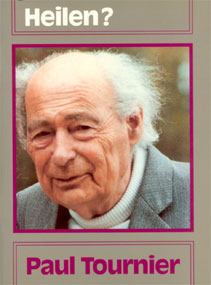 Listen to Eugene Petersen write of the time he and his wife attended a lecture by Paul Tournier and discovered an important new image for his life and work:
 One of the many alternatives on a menu is called ‘Hobson’s Choice’.
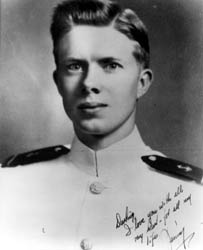 Before Jimmy Carter was elected President of the United States he wrote a book in which he told about his graduation as a naval officer.
 Friend and former colleague, Jack McFadyen, once told of a time when he was serving as a chaplain at an Army Camp in New Zealand.
 In his book, Leadership Jazz, Max de Pree, says: “I enjoy jazz and one way to think about leadership is to consider a jazz band leader. Jazz-band leaders must choose the music, find the right musicians and perform – in public.

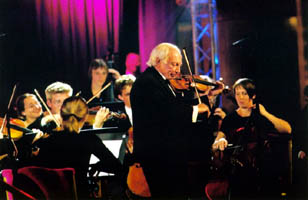 Not long ago one of the world’s great violinists, Isaac Stern, was playing a Mozart violin concerto with the New York Philharmonic Orchestra. Midway through the first movement Isaac Stern had a lapse of memory. He forgot the music.


